






From a woman who visits the ghat every year just to offer prasad to families creating their own makeshift ghats on rooftops, Chhath Puja in Lucknow reflects how an age-old Bihari tradition has grown into a celebration embraced by people across communities and generations.
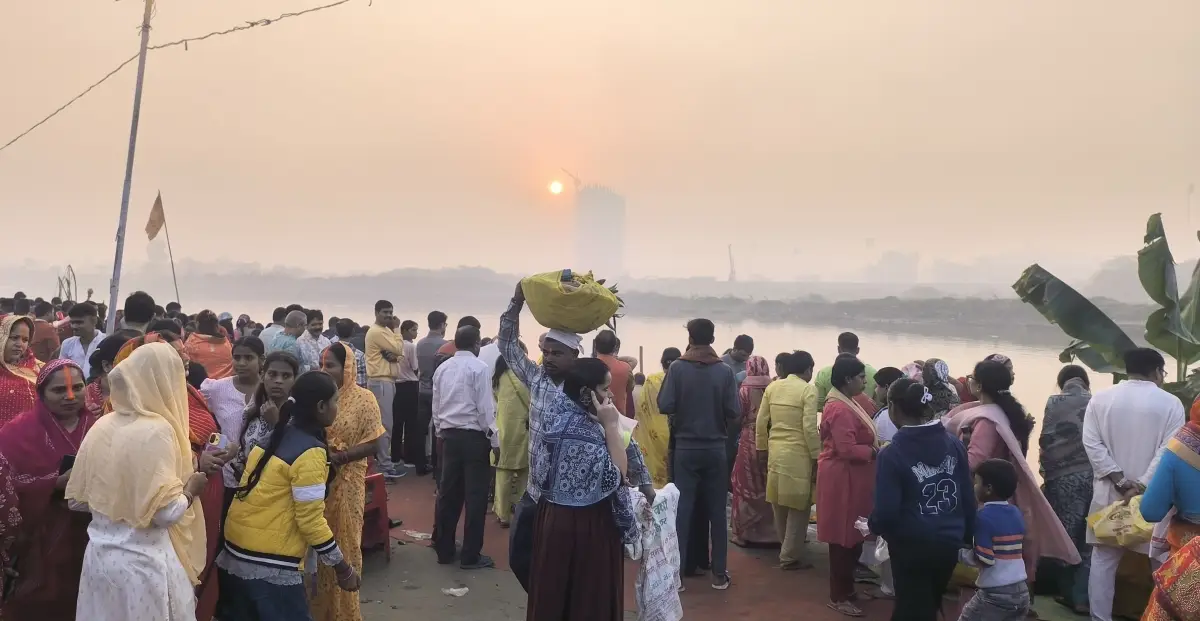
Lucknow: As the setting sun descended on the horizon, devotees gathered at Chhath ghats across Lucknow with bamboo baskets filled with seasonal fruits, thekua, sugarcane and other traditional offerings. Standing in the water with folded hands, they offered prayers to the setting Sun, continuing a tradition that has travelled far beyond its traditional heartland of Bihar.
For many, Chhath is more than a religious festival. It is a tradition inherited from grandparents, a vow made during difficult times, and a celebration that brings families and neighbourhoods together. Although deeply rooted in the cultural traditions of Bihar, the festival has increasingly found a place in the lives of people across Uttar Pradesh and other parts of the country.
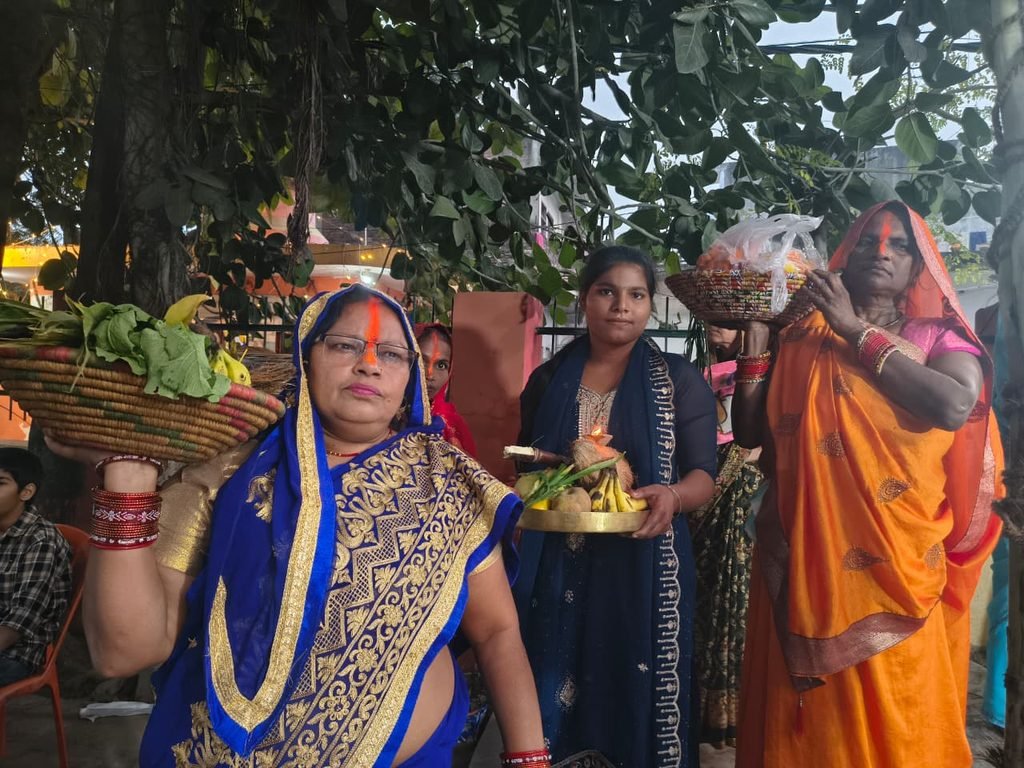
At the RDSO Chhath ghat, Suneeta, a resident of Para, Lucknow, was among those who came to offer prasad. She does not observe the rigorous Chhath fast herself, but makes it a point to visit the ghat and offer prasad every year.
For her, the practice is a family tradition that goes back to her grandmother’s time. Although Chhath Puja is not formally observed in her family, offering prasad has remained an essential part of their annual tradition.
Her story reflects how faith can extend beyond the strict rituals of a festival, with people finding their own ways to remain connected to inherited customs.
For Sangita, however, Chhath began with a personal prayer during one of the most difficult phases of her life.
She started observing the fast a few years after her marriage, when her family was struggling financially. The situation had become particularly difficult, with financial constraints also affecting her children’s education. During that period, she made a vow to Chhathi Maiya and began observing the Chhath fast.
Nearly 15 to 20 years later, she continues the tradition every year. Her children have secured jobs, have families of their own, and the family now has a home of its own. Sangita considers these developments a fulfilment of the wishes she had once prayed for and continues to observe the fast with gratitude and devotion.
While many devotees gather at community ghats, some have also found ways to bring the festival home.
Poonam Pathak, who has been observing Chhath even before the birth of her son, created a small ghat on her rooftop terrace this year with his help. She has traditionally observed the fast and prepared different food items for the puja, while inviting neighbours to participate in the celebrations.
This year, the festival became even more special for the family as her son also observed the fast after they made a wish to Chhathi Maiya. What was once her personal religious practice has gradually become a family tradition passed on to the next generation.

An ancient tradition rooted in the worship of the Sun
Chhath Puja, also known as Surya Shashthi or Dala Chhath, is among the most significant festivals associated with Bihar, eastern Uttar Pradesh and the Mithila region. Its religious roots are associated with ancient Vedic traditions of Sun worship. The Sun is revered as the source of energy and life, while Chhathi Maiya is worshipped for the well-being, prosperity and protection of families and children.
The exact historical origin of the festival cannot be traced to a single event. Its traditions are linked to ancient nature worship, regional folk practices and Hindu religious narratives.
According to popular beliefs, Karna, the son of Surya in the Mahabharata, worshipped the Sun God. Another popular legend associates the observance with Draupadi, who is believed to have prayed to the Sun during the Pandavas’ exile. There are also traditions connecting the festival with Lord Ram and Goddess Sita after their return to Ayodhya.
Over the years, Chhath has evolved from a deeply rooted regional celebration into a festival observed by devotees in different parts of India and abroad, particularly among communities that have carried their cultural traditions to new cities.
Four days of devotion: How Chhath Puja is performed
Chhath is observed over four days during the Kartik month of the Hindu calendar. The rituals involve strict discipline, cleanliness, fasting and offerings to the Sun God. Unlike many other Hindu festivals, the worship is performed directly by devotees, without necessarily requiring a priest.
Day 1: Nahay Khay
The festival begins with Nahay Khay. Devotees take a ritual bath, clean their homes and prepare for the days of worship. The food is cooked with particular attention to cleanliness and purity, traditionally using separate utensils. A simple satvik meal, commonly consisting of rice, chana dal and bottle gourd (lauki), is prepared and eaten by the person observing the fast.
Day 2: Kharna
The second day is observed as Kharna or Lohanda. Devotees observe a fast throughout the day and break it only after sunset following prayers. A special prasad, generally consisting of jaggery-based kheer made with rice and milk, along with roti, is prepared. The prasad is first offered to Chhathi Maiya and then distributed among family members and others.
After Kharna, devotees undertake the rigorous approximately 36-hour nirjala fast, during which they abstain from both food and water until the morning Arghya on the fourth day.
Day 3: Sandhya Arghya
The third day is the main evening of Chhath celebrations. Devotees prepare traditional prasad, including thekua, seasonal fruits and other offerings. These are arranged in bamboo baskets or soops and taken to riverbanks, ponds or specially prepared ghats.
Devotees stand in water, facing the setting Sun, and offer Arghya using water and milk. Family members accompany them, while folk songs dedicated to Chhathi Maiya fill the surroundings.
In Lucknow, the Sandhya Arghya in 2026 was observed on November 15, with sunset at approximately 5:16 pm.
Day 4: Usha Arghya
The festival concludes the following morning with Usha Arghya. Devotees return to the ghats before sunrise and offer prayers to the rising Sun. The morning offering marks the completion of the fast. After the ritual, devotees break their fast, traditionally known as Paran, and distribute prasad among family members, neighbours and visitors.

What goes into the Chhath Puja basket?
- The traditional offerings are an important part of Chhath. Bamboo soop and daura (baskets) are used to carry the prasad. Commonly used items include:
- Thekua: A traditional homemade sweet prepared using wheat flour, jaggery or sugar and ghee.
- Seasonal fruits: Bananas, coconuts, apples, sweet lime and other locally available fruits.
- Sugarcane: An important traditional offering, often used in decorating the puja space.
- Coconut and dry fruits: Included in the offering baskets.
- Suthni and sweet potato: Traditional seasonal produce offered during the festival.
- Rice laddoos and other homemade sweets: Prepared as part of the prasad.
- Bamboo soop and daura: Used to arrange and carry the offerings.
- Earthen diyas: Lit during the evening rituals as part of the traditional worship.
- Water and milk: Used for offering Arghya to the setting and rising Sun.

The preparation of prasad is traditionally carried out with strict attention to cleanliness. Many families also follow specific customs regarding the preparation and handling of food during the festival.
More than a festival, a tradition that brings people together
One of the most distinctive aspects of Chhath is that its celebrations are not limited to those observing the fast. Families, neighbours and entire communities participate in preparing the ghats, arranging offerings, singing traditional songs and helping devotees complete the rituals.
From community gatherings at riverbanks to small ghats created on rooftops, the celebration has adapted to different urban settings without losing its essential spirit.
Perhaps that is what makes Chhath special: its rituals may be demanding, but its sense of belonging extends to everyone. Born out of a deep reverence for nature and the Sun, the festival continues to find new homes, bringing with it the traditions, memories and faith of generations.